I'm a scientist, first.
Scientist is the identity; independent technical advisory is the commercial arrangement. Below: who I am, how I work, and the research the practice rests on.
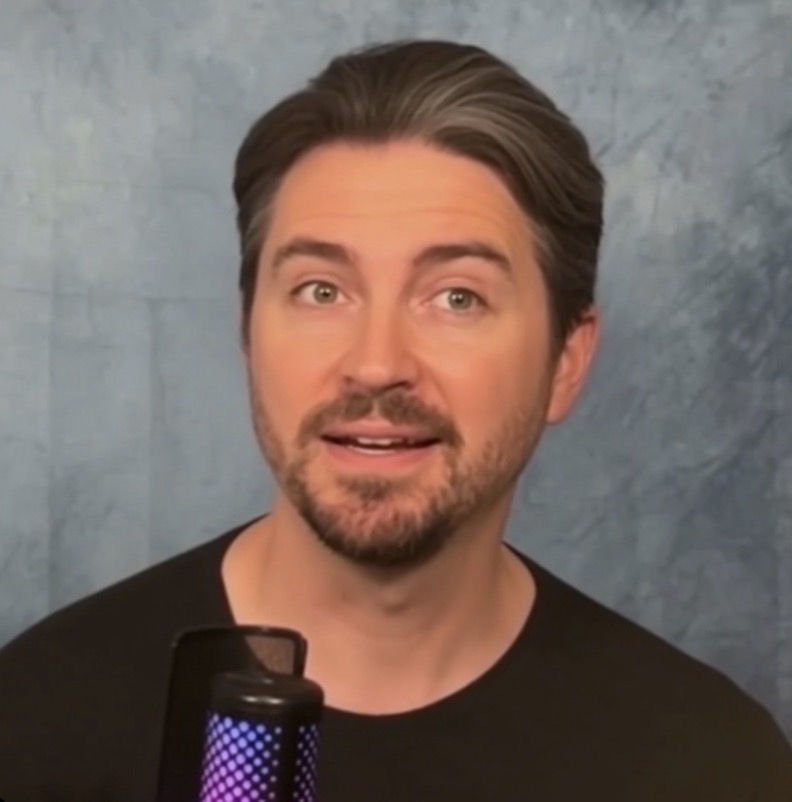
I'm an independent scientist with an active research program in computational chemistry, AI, and complex systems. Kedion is where that discipline is applied commercially: I come in from the outside and determine what is actually happening.
Doing real science is what makes the evaluation intelligent and objective. Research means testing models against reality, finding their failure regimes, and telling a convincing explanation from a convincing presentation. I bring the same discipline to a company's AI system, architecture, or vendor claim, with no stake in the existing explanation and nothing to gain from the answer being reassuring.
The work itself is diagnosis: reconstructing how a system actually works, identifying what class of system it is, and translating the result into decisions executives and engineers can act on together. Classification is the critical step: what class of system or problem you're actually dealing with, which properties matter, and what established body of knowledge applies to it. A problem that is classified correctly becomes much easier to diagnose.
What Kedion is.
Kedion is the contracting entity behind this work: science-led technical advisory for complex AI and software systems. It is the name that goes on the statement of work, the rate card, the invoice, and the tools. The practice is one person, and that is the asset, not something to hide.
So there is no "team," no "our engineers," no fabricated staff. When you engage Kedion, you get me, first person, first hand. Going all the way into a codebase is the sharpest version of the work, not the definition of it: the same investigation applies to a boardroom briefing, a proposed architecture, a vendor's claims, or an acquired stack.
It's structural, not a matter of talent.
Any system an enterprise depends on, an application, a data pipeline, a model stack, an AI product, was built by many people across many years. Each person holds a fragment. Nobody was ever assigned the job of holding the whole thing, and everyone who might is themselves a fragment-holder with a stake in their own fragment.
So the cohesive account doesn't exist. Not because the organization is careless, but because accretion is how these things get made. The picture has to be assembled by someone from outside who can go all the way down and then come back up. Complexity science is the study of exactly this: systems whose behavior isn't legible from their parts. It's what the training is for.
Down into the system, then up into a class.
Three moves: descent, causal reconstruction, classification. I go all the way down into the system, the code, the documents, the decision history, the interviews, and reconstruct the real causal chain: what actually happens, in what order, driven by what. Then I classify it, placing it in a class of system whose behavior is already understood, so its known properties become available to your team.
That round trip, down into the system, then up into something executives and engineers can act on from the same page, is what the whole practice turns on.
Independent research keeps the practice scientific.
I maintain an independent research program in computational chemistry, AI, and complex systems. That work keeps this practice grounded in actual scientific investigation: testing models against reality, identifying their failure regimes, and distinguishing convincing explanations from convincing presentations. Kedion is the commercial application of that discipline.
The idea underneath the practice, that structure is the right level at which to understand complex systems, is something I develop in the open and publish with the same rigor I bring to a review. A framework is supposed to defend itself; putting it on Zenodo is how it earns the right to be used on your system.
There is a direct bridge between the research and the practice: the evaluation of scientific AI and computational models. My recent work on machine-learned interatomic potentials is close to a textbook Kedion case study.
- Models marketed as "universal"
- Strong benchmark performance
- Physically incorrect asymptotic behaviour
- Training-data and architecture effects that had to be disentangled
- A conclusion that required both scientific expertise and systems diagnosis
That is Kedion's central activity, determining what a technical system actually does, applied in a domain where the chemistry is indispensable. It points to a specialized capability: independent evaluation of scientific AI and computational models, for AI-for-science companies, scientific-software vendors, materials startups, investors, and research organizations.
Writing lives on my personal site, not here, this site stays focused on the practice. Follow the research and the essays at sean-mcclure.com.